
In continuous gas-blending environments, the challenge is often not generating the correct mixture but verifying the composition quickly enough to respond to process deviations in real time. In these environments, even small deviations in gas composition can have significant consequences, affecting product quality, safety, and regulatory compliance.
Traditionally, gas blending processes rely on mass flow controllers (MFCs) or volumetric mixers to dose individual gases. Mixing manifolds then homogenise the blend. Operators typically verify composition using gas chromatography (GC), thermal conductivity detectors (TCD), or infrared analysis. These methods are well established. They can support batch verification and, in some cases, in-line monitoring. However, continuous or process-integrated environments can expose limitations in speed, complexity, and operational overhead.
The Challenge with Conventional Gas Analysis
Many facilities perform quality assurance through routine batch verification or intermittent in-line sampling. While effective, this approach often validates blends after production. As a result, operators cannot respond in real time. In dynamic blending environments, delays from sample transport, conditioning, or sequential analysis cycles can limit the effectiveness of feedback control strategies, especially when composition changes rapidly.
Even with continuous monitoring, traditional systems often require:
- Carrier gases and consumables
- Sample conditioning and handling systems
- Sequential analysis cycles across gas species
Together, these factors introduce delays, increase complexity, and raise operational costs.
This creates several challenges:
- Lag between production and validation, increasing the risk of off-spec product
- Operational inefficiencies, as processes may need to be paused or adjusted
- Increased waste in high-volume or continuous environments
- Higher running costs due to consumables and maintenance
In critical applications, such as medical gases or food packaging, these limitations are not just operational concerns, but potential safety risks.
A Shift Towards Real-Time, Process-Integrated Insight
To address these challenges, industry is showing growing interest in analytical techniques that can deliver continuous, in-line measurement without adding process complexity. Raman spectroscopy offers one approach, enabling simultaneous, species-specific measurement of multiple gases directly within the process. This can reduce reliance on sample extraction, carrier gases, and sequential analytical workflows, giving operators faster insight into changing gas composition.
Why Raman? Key Advantages in Gas Blend Monitoring
Gases are inherently weak Raman scatterers, so signal enhancement is a key consideration when translating Raman gas analysis from laboratory measurement to practical process monitoring.
- Non-Invasive, In-Line Measurement – Raman spectroscopy enables direct analysis within the process line, reducing reliance on external sampling and laboratory-based verification.
- Simultaneous Multi-Gas Detection – A single measurement can identify and quantify multiple gases – even in complex mixtures – providing a complete view of composition in real time.
- High Molecular Specificity – Raman scattering is highly specific to molecular structure. It clearly differentiates gases such as O₂ and N₂, or CO and CO₂.
- Improved Safety and Compliance – Continuous monitoring enables immediate detection of blending deviations, supporting tighter control and helping meet regulatory and customer specifications.
- Reduced Operational Overhead – Removing carrier gas infrastructure and reducing maintenance requirements can simplify deployment in continuous-process environments.
From Verification to Control
The key advantage of Raman-based gas analysis is not simply speed, but the ability to move from verification to active process control. Rather than relying solely on batch validation or periodic sampling, operators can:
- Monitor composition continuously
- Detect deviations as they occur
- Adjust blending processes in real time
This transforms gas analysis from a downstream quality check into an integrated part of process optimisation.
Supporting the Next Generation of Industrial Gas Applications
As industrial processes become more automated and data-driven, the need for fast, integrated gas analysis continues to increase. Gas chromatography remains an important tool for high-precision analysis and validation. However, continuous-process environments can expose limitations around system complexity, consumables, and sequential measurement workflows. The value of Raman in gas blend monitoring lies not in replacing existing analytical methods, but in enabling continuous process visibility rather than delayed verification.
Putting Real-Time Gas Raman into Practice
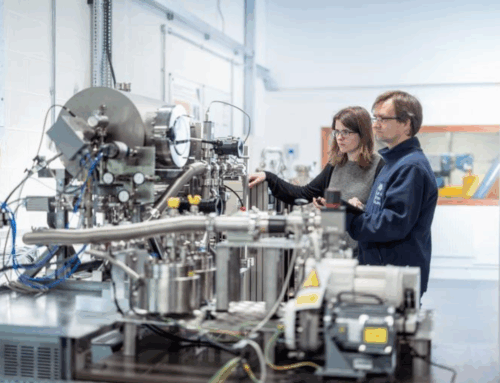
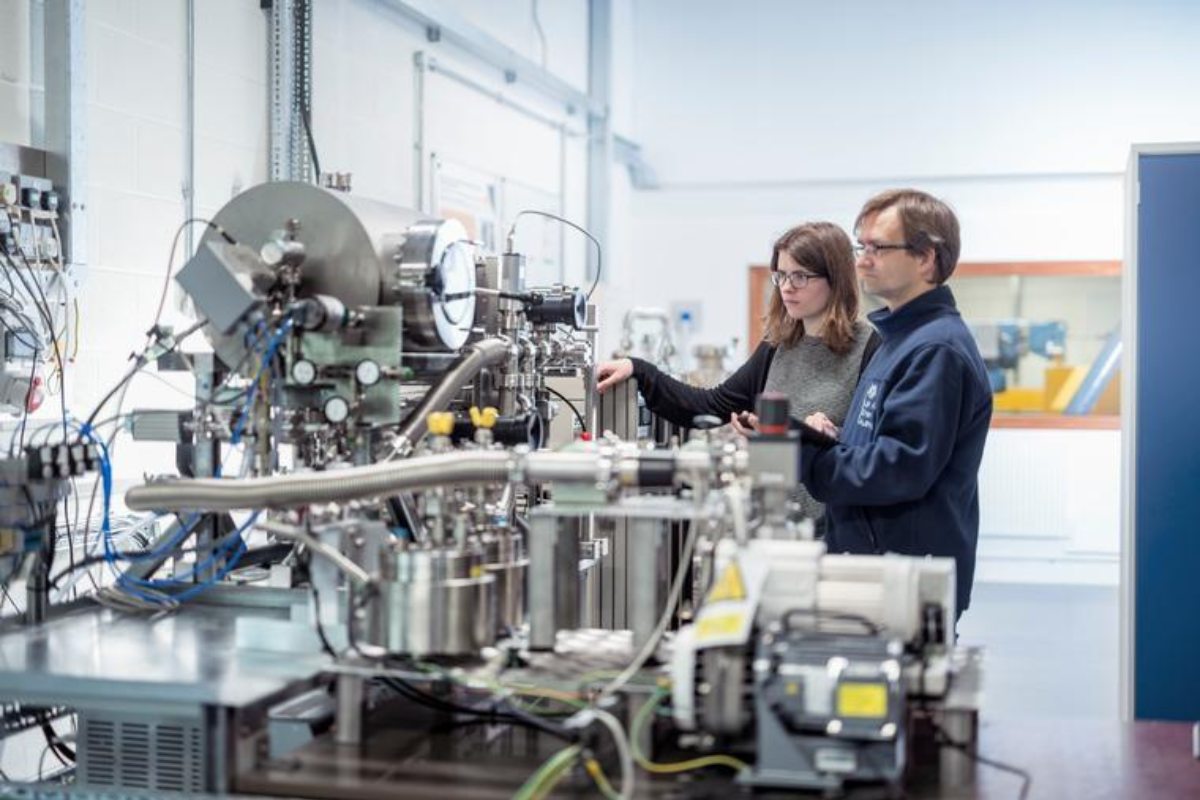
IS-Instruments has developed Notus to bring the advantages of real-time Raman gas analysis into a compact, robust platform suitable for industrial and research applications.
Notus provides simultaneous, species-specific measurements of multiple gases, enabling users to monitor changes in gas composition in situ rather than relying solely on periodic sampling. To address the inherently weak Raman signals produced by gases, the system uses hollow-core microstructured optical fibre to extend the interaction between the laser light and gas sample, improving signal strength while maintaining a compact measurement system.
Designed for continuous monitoring, Notus also reduces reliance on carrier gases, chromatographic separation and regularly replaced consumables, helping simplify analytical workflows while providing immediate insight into changing process conditions.
Interested in real-time gas monitoring? Discover how Notus could support your gas analysis or process monitoring application. Talk to one of our team about your measurement requirements.