
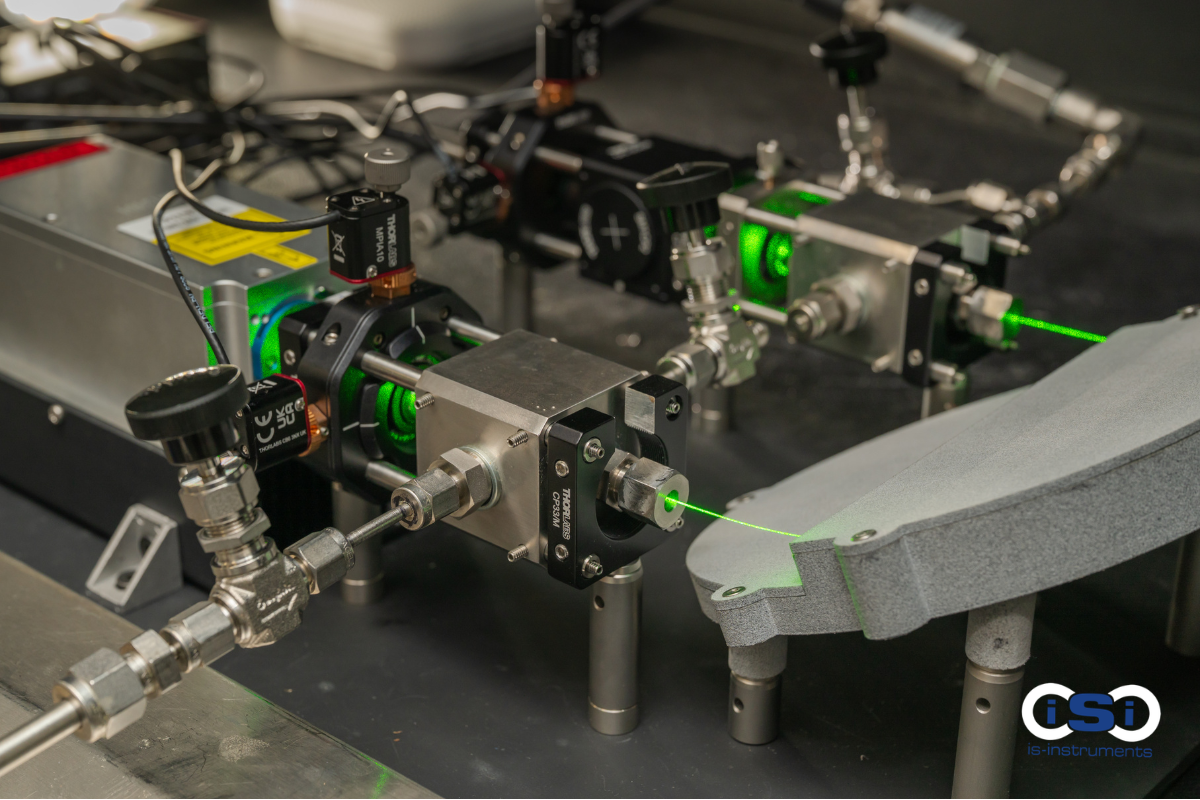
Latest test results from IS-Instruments’ Notus gas Raman system demonstrate rapid measurement of multiple gases at concentrations as low as 5 ppm, using a single instrument with no adjustments between measurements. Results for methane and ethylene also indicate potential limits of detection in the hundreds of ppb with the current setup.
Gas Raman spectroscopy offers a compelling proposition for gas analysis: different gases can be identified and measured through their characteristic molecular fingerprints using a single measurement platform. Historically, however, the inherently weak Raman effect has limited the sensitivity achievable by gas Raman systems.
IS-Instruments developed Notus to address that limitation. Earlier testing demonstrated rapid detection across multiple gas species. The latest results take that performance further, combining low-ppm sensitivity with measurement times of one minute or less. This demonstrates the potential for rapid, flexible gas analysis across multiple target species.
One instrument. Multiple gases. No reconfiguration.
The latest tests measured methane, carbon dioxide, ethylene and carbon monoxide using the same instrument, with no adjustments between measurements. This combination of sensitivity and flexibility is particularly valuable for organisations that need to identify or monitor different gases without relying on separate analysers or measurement techniques.
Methane at 10 ppm
Methane was measured at 10 ppm, producing a clearly defined Raman peak with a signal-to-noise ratio above 60.
The measurement was completed in less than one minute, using a short fibre length.
Based on this result, the estimated limit of detection for methane with the current configuration is in the hundreds of ppb. Longer fibre lengths and extended integration times suggest that detection at tens of ppb could be possible.
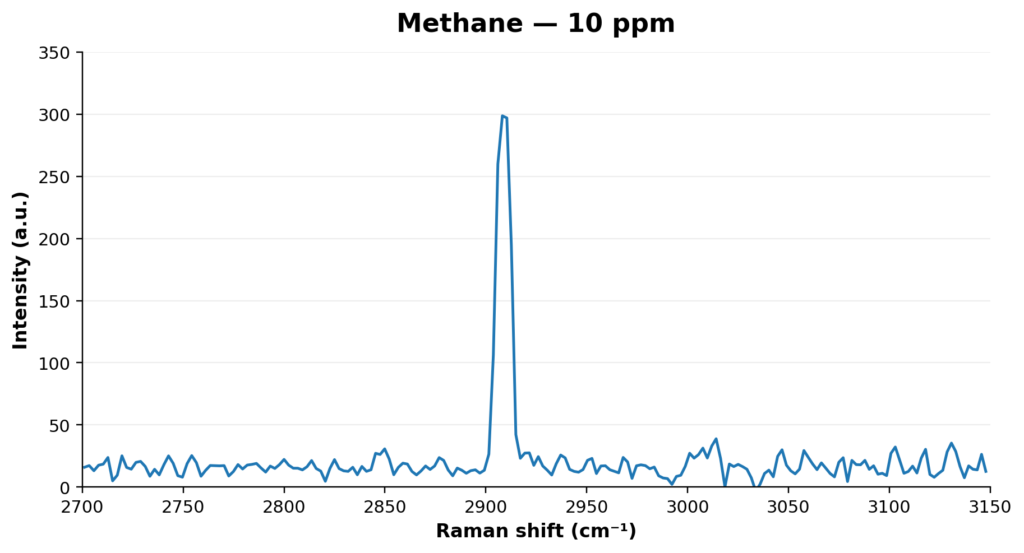
Figure 1: Raman spectrum of methane at 10 ppm. Measurement time <1 minute.
Carbon dioxide at 10 ppm
Carbon dioxide presents a different measurement challenge. Its two identifying Raman peaks lie close to those of nitrogen and have scattering cross-sections of 1.5 and 1.7, respectively, compared with 8 for methane.
Despite this, Notus clearly measured the CO₂ Raman peaks at 10 ppm. It achieved a signal-to-noise ratio of approximately 14 with a one-minute integration time.
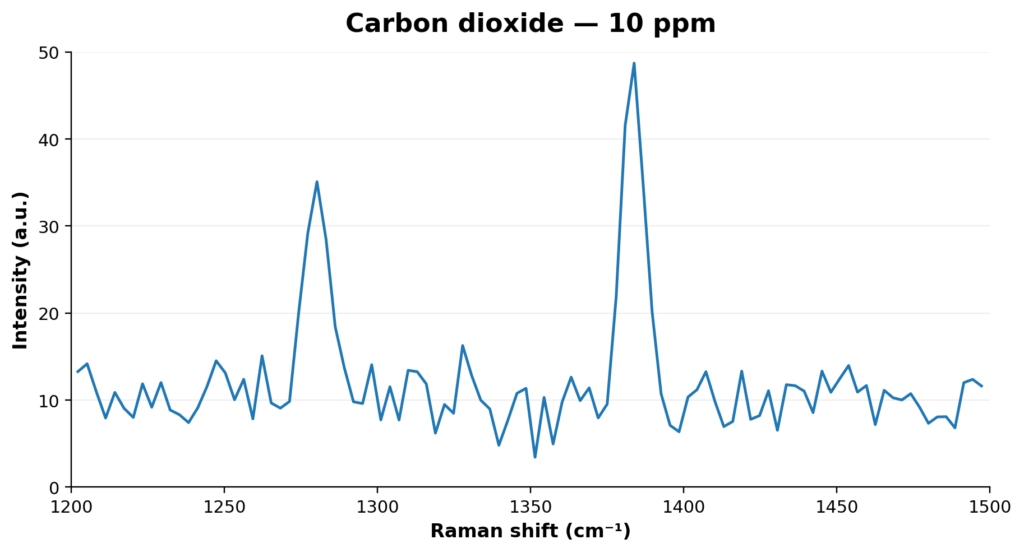
Figure 2: Raman spectrum of CO₂ at 10 ppm measured using Notus with a one-minute integration time.
Ethylene at 10 ppm
Testing with ethylene further demonstrates Notus’ ability to switch between gas species without instrument changes.
At 10 ppm, multiple ethylene peaks were clearly observed across the Raman spectrum. Here, the signal-to-noise ratios ranged from 25 to greater than 50. As with methane, these results indicate a potential limit of detection in the hundreds of ppb with the current setup.
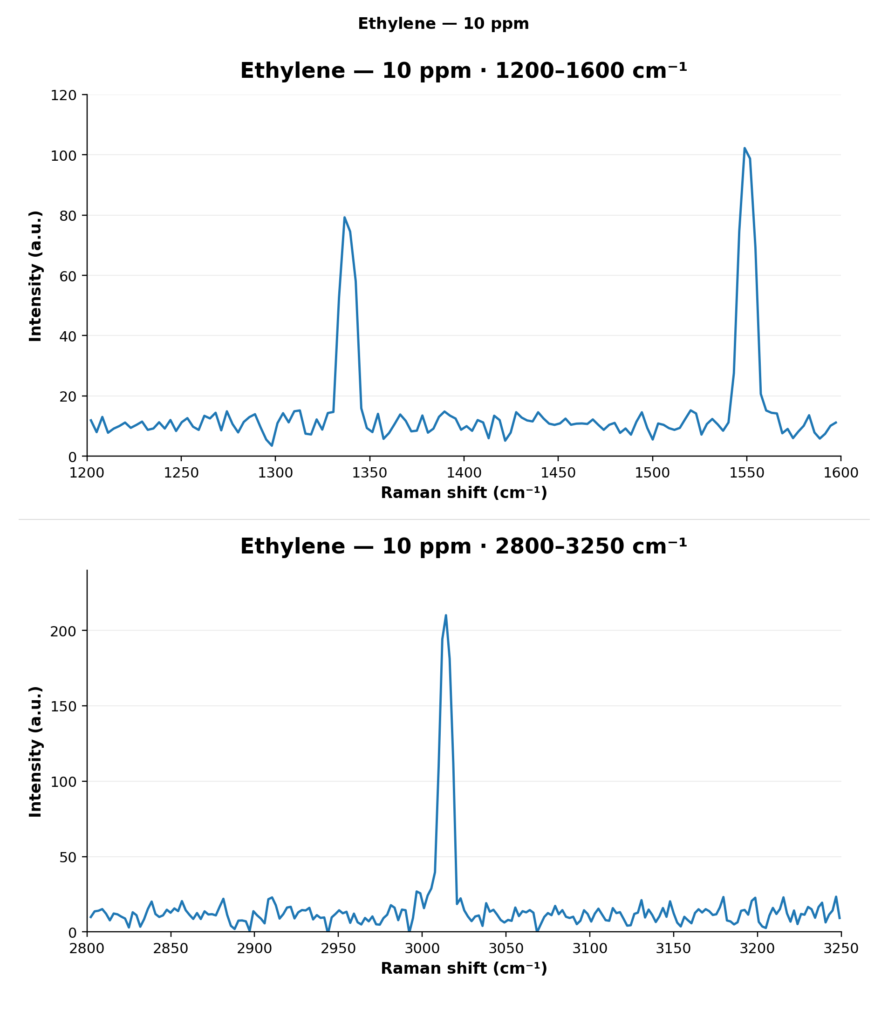
Figure 3: Raman spectrum of 10 ppm ethylene showing three peaks across the spectrum. Measurement time: one minute.
Carbon monoxide at 5 ppm
Notus was also tested using carbon monoxide at a concentration of just 5 ppm.
The resulting Raman spectrum produced a signal-to-noise ratio of approximately 10, indicating a limit of detection of around 1 ppm.
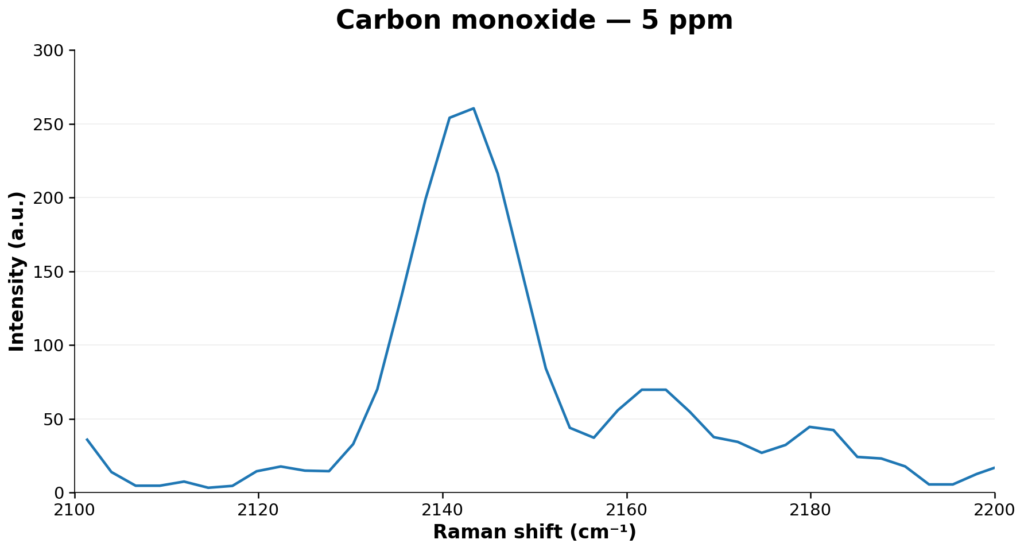
Figure 4: Raman spectrum of carbon monoxide at 5 ppm.
When the reference gas becomes the limiting factor
As we investigate the limits of Notus’ performance, we are encountering an interesting challenge.
At very low concentrations, establishing the true limit of detection depends not only on instrument performance, but also on having sufficiently well-characterised reference samples to test it against.
Certified gas mixtures have specified concentrations with associated tolerances or uncertainties. As Notus becomes capable of measuring increasingly low concentrations, obtaining calibrated test samples with sufficient certainty becomes progressively more important. Indeed, the availability of suitable calibrated samples is now one of the factors limiting our ability to establish Notus’s ultimate performance at these very low concentrations. These current results specifically identify the lack of calibrated test samples at low concentrations as the main limitation on assessing performance.
Therefore, the challenge is shifting from whether Notus can detect concentrations this low to whether sufficiently well-characterised samples are available to determine exactly where its detection limit lies.
From test results to real-world gas analysis
Across four different gases, Notus has demonstrated its ability to make rapid measurements at low-ppm concentrations using the same instrument without adjustment between measurements. For users, that combination of sensitivity and flexibility is significant. Applications requiring analysis of different gases can involve a trade-off between detection performance and the complexity of using multiple analysers or measurement techniques.
Notus offers a different approach: sensitive, non-destructive multi-gas measurement from a single Raman platform. These results represent a snapshot of its current performance, not the end of the development process.
Notus is now undergoing independent testing ahead of full market launch.
If you’re working with a challenging gas measurement and want to find out whether Notus could meet your requirements, talk to the IS-Instruments team. Tell us: what are you trying to measure?