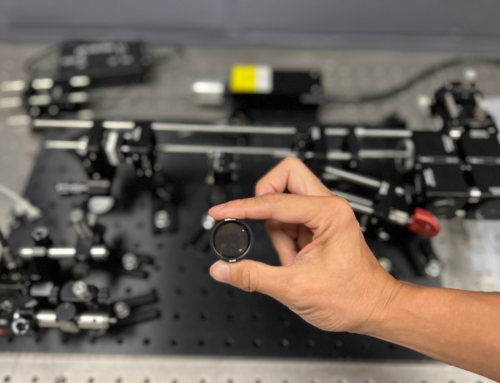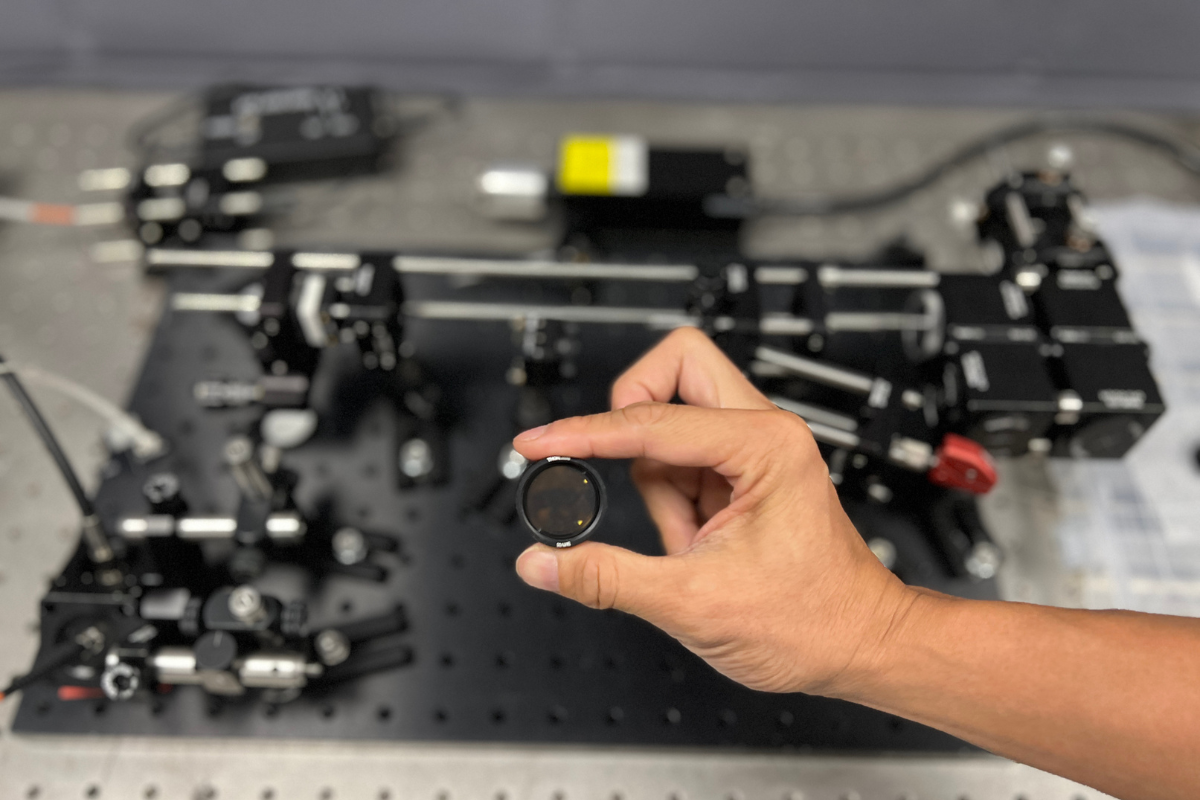

Developing a robust laser delivery solution for pharmaceutical process monitoring
Hollow-core fibre (HCF) is opening new possibilities for UV Raman spectroscopy. Unlike conventional optical fibres, which transmit light through solid glass, HCF guides light predominantly through air. This significantly reduces UV-induced degradation in standard silica fibres, making HCF an attractive option for applications requiring reliable, long-term UV laser delivery.
IS-Instruments has been working with hollow-core fibre supplied by our long-standing collaborators at the Optoelectronics Research Centre (ORC) for several years, integrating it into our novel Gas Raman systems. In these instruments, the fibre remains safely enclosed within a compact housing, where it can be carefully routed and protected. This allows the instrument to maintain a small footprint while leveraging the fibre’s unique optical properties.
However, new applications are creating new engineering challenges.
From protected instrument to industrial environment
As part of the InSPIREmed and Future Factories projects, IS-Instruments is investigating the use of HCF as a UV laser delivery fibre for immersion Raman spectroscopy. Rather than remaining safely within the instrument, the fibre must deliver UV laser light from the laser source to an immersion Raman probe positioned directly within a pharmaceutical manufacturing process. In a practical installation, this could mean spanning distances of two metres or more while operating outside the instrument enclosure’s protection.
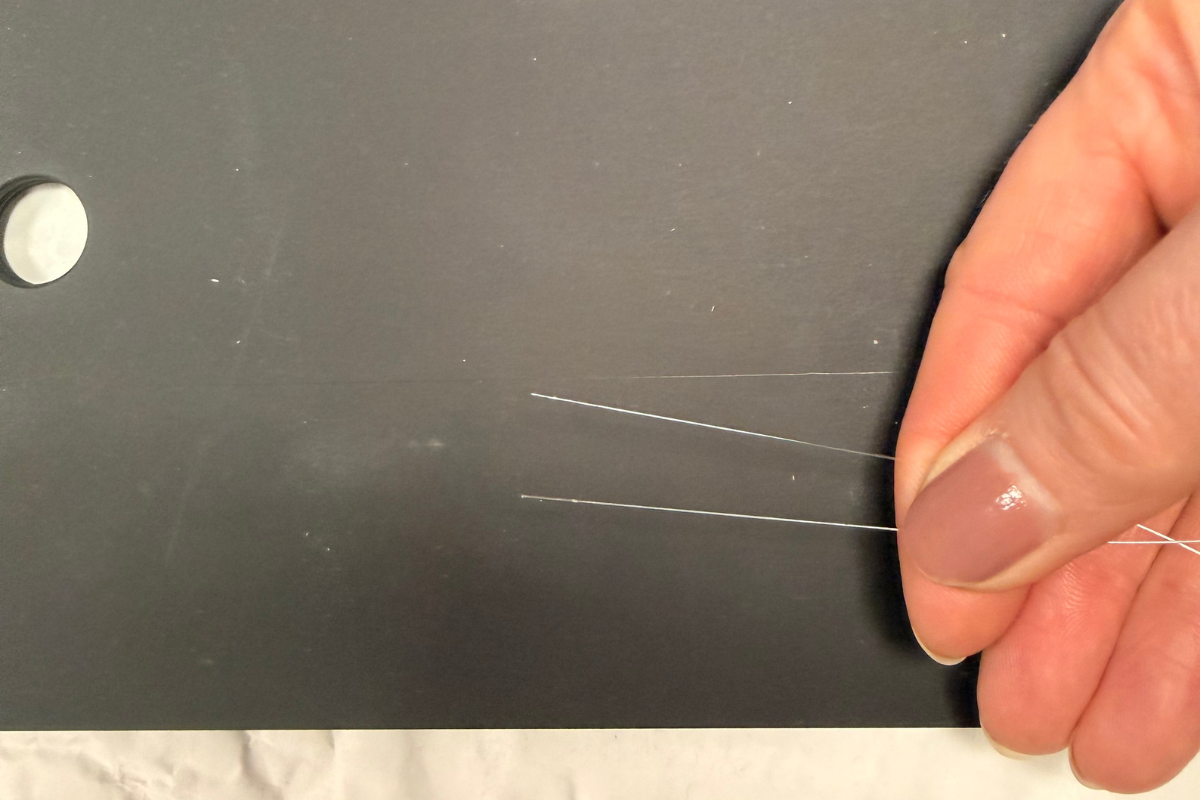
Apart from a thin acrylate coating, the fibre supplied by the ORC has no connectors, strain relief or protective sleeving. While this is entirely appropriate in laboratory evaluations and within our gas Raman systems, it poses a significant engineering challenge: developing a robust fibre assembly that withstands routine handling without compromising optical performance.
Engineering the next step
To bridge this gap, Optical Engineer Dr Will Brooks is investigating how commercially available components can be adapted to ruggedise the HCF for real-world conditions. The current development work combines FC/PC connectors, stainless-steel sleeves and 3 mm furcation tubing to create a protective fibre assembly that can withstand the mechanical demands of laboratory and industrial use.
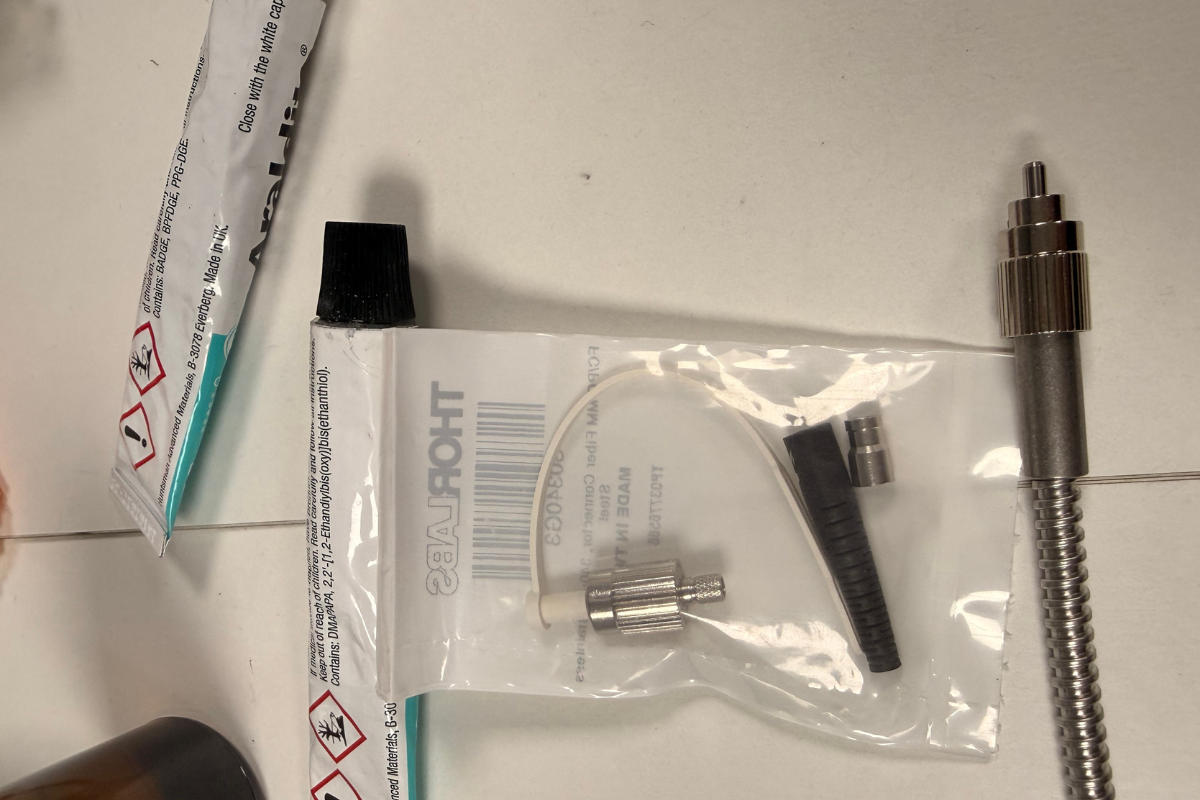
Unlike conventional solid-core fibres, however, hollow-core fibres present their own unique challenges. Components designed for standard optical fibres cannot simply be assembled in the usual way; each stage must be carefully adapted to protect the delicate microstructured fibre while preserving its optical performance.
As Will explains,
“The fibre we receive from the ORC is essentially bare fibre with a thin acrylate coating. To use it as a practical laser-delivery fibre, we’re exploring how standard fibre-optic components can be adapted for use with HCF. The aim is to create an assembly that offers the protection and handling characteristics of conventional fibre while maintaining the performance that makes hollow-core technology so valuable.”
Why it matters
For pharmaceutical manufacturers, UV Raman spectroscopy has the potential to provide continuous, real-time insight into complex manufacturing processes, supporting Process Analytical Technology (PAT) strategies for therapeutic and vaccine production. Delivering the UV laser reliably to the measurement point is fundamental to achieving this. While advances in spectroscopy often focus on detectors, lasers or analytical performance, practical engineering solutions such as fibre protection and packaging are equally important if new technologies are to move from research laboratories into everyday industrial use.
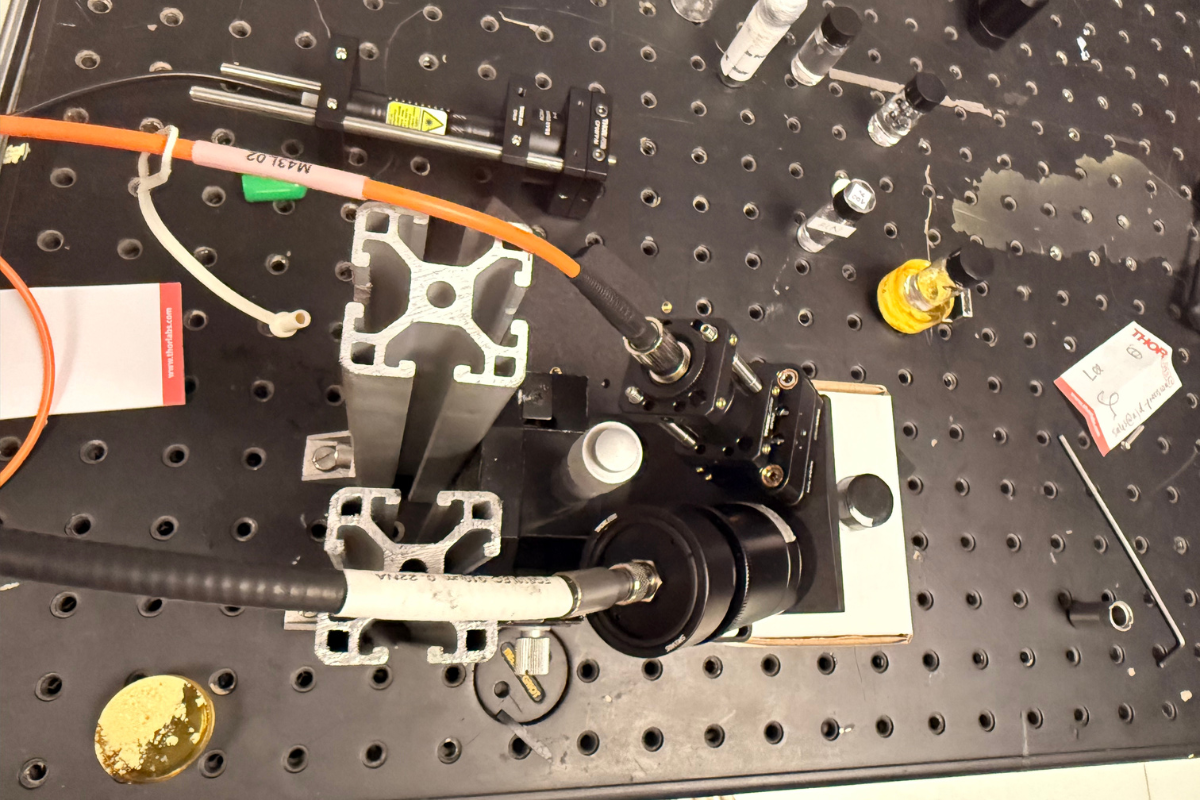
Projects such as InSPIREmed and Future Factories offer an opportunity to tackle these challenges by combining cutting-edge photonics research with the engineering expertise required to turn promising concepts into practical analytical instruments. Although the ruggedisation of hollow-core fibre remains a work in progress, it highlights an important aspect of innovation that is often overlooked: successful products are rarely defined by scientific breakthroughs alone. They depend on solving the many engineering challenges that make those breakthroughs usable in the real world.